
Clover’s reminder for Wednesday:
Be careless in your dress if you will, but keep a tidy soul.
Mark Twain
photo by B. Behan. All rights reserved.

Clover’s reminder for Wednesday:
Be careless in your dress if you will, but keep a tidy soul.
Mark Twain
photo by B. Behan. All rights reserved.
…while I take one of my periodic blogging breaks to re-think, re-strategize and refresh my ideas for The Blue Kimono.
Since starting my blog over a year ago, the creative process it’s fostered me has nudged me into new places. I’ve resigned from my “day job” raising money for an environmental non profit organization, and I’ve started a business creating clothing from recycled fabrics.
I can easily see the progression of these changes back to the beginning of my blog.
I could not have done any of this important mid-life growth without the support of my blogging friends, and I’m so very grateful to all of you.
The original purpose for the blog isn’t really relevant any more and I’m now considering whether to change the focus to more closely match what I’m doing with my “work.”
Thanks, all you dear readers. More to follow.
sallymandy

photo, Craftzine, here.
Have you ever bought a cashmere sweater, only to have it pill up impossibly on the very first day?
Have you ever wondered how manufacturers can sell $69 cashmere sweaters, when such products used to run in the hundreds of dollars?
Cashmere—the coat of the cashmere goat--has been a luxury fiber for almost three hundred years. The last ten years have seen an influx of cheap cashmere into world clothing markets.
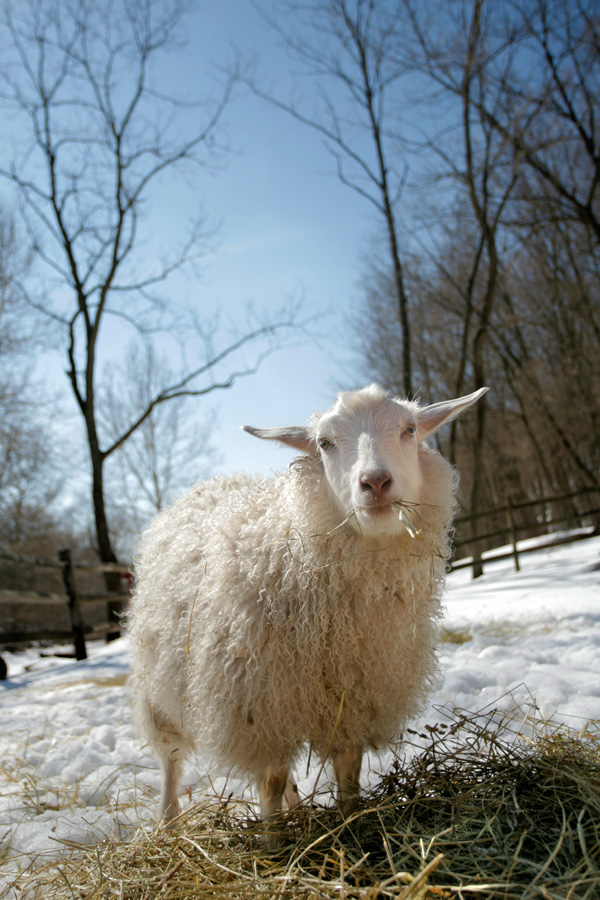
isn’t she cuuute? Link, here.
The good news is, cashmere is more accessible to many of us. It’s even showing up in thrift stores.
The bad news is, unless we know what we’re paying for, it’s possible to be very disappointed in a cashmere purchase.
Here are some facts about cashmere that can help us make informed buying decisions (see my sources at the bottom of post).

Photo from Lookchina, here.
Test for Quality
Pashmina
“Pashmina” is not a fiber separate from cashmere and is used to mislead consumers into thinking they’re getting cashmere. The word comes from the Persian word for wool—Pashm. A garment whose fiber is labeled as “pashmina” in the U.S. is breaking federal regulations that state the exact content of cashmere must be disclosed.
Care of Cashmere
Knit cashmere should be hand-washed.
If you should buy less-than-great quality cashmere, and it pills up, try an inexpensive battery-powered fabric shaver or a sweater comb.
Recent Problems with Cashmere Production
Mislabeling is a growing problem for U.S. retailers.
In the early 2000s, when luxury items were at a premium globally, cashmere was “democratized” and manufacturers creating all sorts of new, accessible products.
However, increased demand for fiber has resulted in mislabeling and items being sold as cashmere when they may actually be blended with other, inferior fibers. These stocks are being sold to Chinese sweater mills as well to Western buyers. As a result, more mislabeled garments are expected to be found in retail stores.
The quality of cashmere from China is a growing concern. In the mid 2000s it was reported that cashmere coming out of China was not regulated well and there were many reports of crossbreeding the cashmere goats with other goats, and mixing cashmere with wool.
The Bottom Line
Before you drop hard-earned money in any amount on a cashmere garment, know as much as you can about what you’re getting. There’s nothing wrong with a lower-priced, lower-quality garment as long as consumers aren’t misled about what they’re buying.
From: Cashmere and Camel Hair Manufacturers’ Institute FAQ’s and U.S. Better Business Bureau article on Federal Trade Commission Regulations on Cashmere Labeling. Albany Times Union, Dec, 25, 2004; “Italy Faces Mounting Threats to Cashmere,” Women’s Wear Daily Dec. 6, 2005.
sallymandy
