Wednesday, February 5, 2014

Book Review: The Little Guide to Vintage Shopping by Melody Fortier


I don’t need to tell you, dear readers, that vintage clothing is hot.

But wading into the ocean of vintage fashion shopping can be confusing.

What actually is vintage clothing? How can you learn to tell the difference between clothes that are authentic vintage and those that were made five years ago in a vintage style?

The Little Guide to Vintage Shopping, by Melody Fortier, is my go-to reference book for all these questions. I’ve looked at quite a few vintage clothing guides, and this is my favorite.

Here’s why: 

First, it has in-depth guidance for how to date vintage clothes—something I absolutely need as a seller of vintage clothing. Melody takes some of the standard “tips” that one finds online about how to date garments, and tells how to understand them in the overall context of the garment. 

For example, we’re often told that metal zippers mean a dress is vintage.  Melody explains why this is often true….but not always. 

November 10 2013 070
1960s silk sheath dress. Photo: Chronologie Vintage.
Another example: you will sometimes read that clothes with union labels are vintage. Again, this is often the case but not sometimes not—and Melody spells it all out clearly. In fact, it’s hard to prove with 100% certainty that a garment is vintage. But there are lots of clues we can use that add up to very educated guesses.

Melody guides us through the process she uses for dating clothes, beginning with looking at their overall silhouette—with a helpful, basic overview of vintage dress shapes—and going on to things like zippers, labels, buttons, fabric, and seams. 

All of this is well organized and easy to understand.

Second, one of my favorite features of The Little Guide to Vintage Shopping is the fiber content reference guide. As a vintage seller, I think it’s important to tell my customers what the garments I sell are made of and how to care for them.

Lots of older pieces don’t have fiber content tags.  Melody shows and tells how to do a simple burn test on a few threads of fabric to figure out what fiber content is in a garment if there’s no care tag.

aaaa
1950s cotton novelty print. Photo: Chronologie Vintage.
If there was nothing else in this book that was valuable, this fiber content guide alone would be worth the price of the book.But, as I’ve said, there’s a lot more that’s valuable too. The book also includes a good overview of vintage jewelry, and tips for storing and cleaning vintage pieces.

Last but not least, there are lots of photos of beautiful vintage pieces. That’s a lot of good stuff in a small, purse-size book.

There’s not much I would improve about this book, but a review is supposed to include the good and bad.

Personally, I don’t find it all that helpful that there are good vintage stores listed in the back of the book. In a few years, who knows if these will still be going? I would rather have had a few  more pages devoted to fashion history.

But that’s just me…the fashion history geek. I’m sure a lot of readers will find the store list helpful.

On the whole, I LOVE this book. If you’re looking for a one-stop vintage buying guide that’s portable and easy to use, you can’t do better than The Little Guide to Vintage Shopping.


Monday, January 27, 2014

A Look Inside My Studio: Behind the Scenes at Chronologie Vintage

It’s always fun to see how other people work, especially when that work is creative or artistic.  Looking behind the scenes at someone else’s workspace offers ideas and inspiration to borrow. It also lets us be peeping Toms in a way that’s not creepy or weird.  And that’s always a good thing.

In that spirit, today I’m going to show you the studio where I do most of the work for my vintage clothes shop. This is where I mend and sometimes alter pieces before taking photos of them. 

I’m lucky enough to work in a fun, funky studio in an old downtown hotel.  Well, actually it used to be a brothel, so I am continuing the tradition of woman-owned businesses here. Or something like that. 

In any case, here’s what my studio looks like: 

studio 005studio 003

This is on a clean day—in fact, the day I moved in. It’s looking a little more like this most days, now. 

cute indie clothes december 2011 036

The east wall of my studio is a clean white backdrop for my photo shoots.  The artist who used the space before me left quite a few nail holes in this wall, but mostly they don’t show up. Someday when business slows down and I find myself twiddling my thumbs, I might paint it. But so far, that hasn’t happened. 

Photos are a huge part of making an online business work. I’m not a photographer, and my first photos were awful. One reason is that light in my studio is pretty scarce. The windows face north, and the light that does come in is kind of cold and blue—you can see this in all the photos above.

These days I use extra “daylight” lights and they help immensely. I keep working to improve my photography, and I think it’s a lot better than it was at first.

When I first started selling on Etsy, I went to our local mall and got a free display mannequin from the Eddie Bauer store. That’s it below. It was good for starting out in my business, especially since it was free.  

Studio shots November 2010 110may 5 053

The manni had some issues, though. It’s made of paper mache and looks like a reptile in close-ups (maybe that’s why it was free). 

Also, it’s super small and regular-size items look weird on it.  Third, it’s made for shirts—and I sell a lot of dresses.

I really struggled with how to show dresses on this manni. In the days before I got my studio, I tried to do dress photos as my house. What do you think—is hanging it from a plant hook in my living room (photo on the right) a good option? I don’t think so, either.

Finally, about a year after I opened my shop, my kind mother bought me two new mannequins. One is female and one is male.

Studio shots November 2010 105

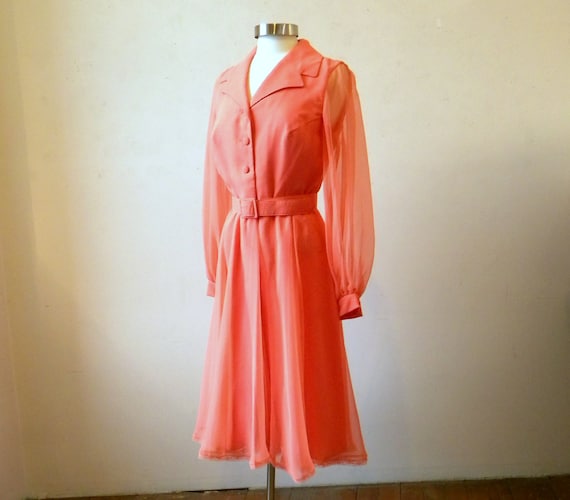
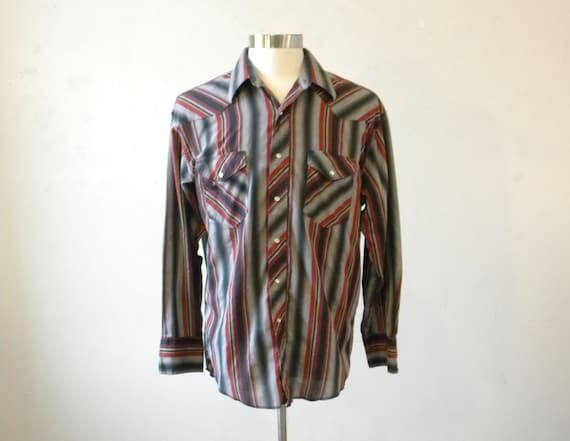
Because my mom bought them for me, she got to name then—she chose Archie and Edith.  Archie and Edith are wonderful. They’re easier to use than the first one and I think they look more professional. Here are some examples of how they look in clothes.

Dancing Queen 70s Chiffon Party or Day Dress / Orange Peach / Secretary Fitted LMen's Western Shirt with Pearl Snaps / Rockabilly Striped Cowboy Shirt

Finally, I started taking pictures with models in addition to using my mannequins. These models are my daughter and her friends. I’ve learned two key tips for working with these teens:  have snacks and beverages around, and expect them to be silly. 

a

One of the things I love most about having my own small business is how much I learn every day. It’s so rewarding to face problems and figure out solutions that work.  

Thanks for joining me on this little journey into my work space and process.

Monday, January 20, 2014

Winter 2014 Fashion Trend: The Big Coat

the big coat

As a vintage clothes seller (and girl who loves to be cozy), I’m thrilled that one of this winter’s top runway trends is the big coat.

Seriously. As a I write from my kitchen table in western Montana, there’s a howling wind outside and the National Weather Service is warning us about something called a polar vortex that’s descending on about half the country. It’s approximately one degree Fahrenheit outside. So…umm, yeah, I’m into a big, warm coat right about now.

But beyond my personal chill factor, the big coat is a trend that’s totally  suited to vintage shopping.  For one thing, most of the current offerings are retro-inspired or even very close copies of vintage styles. So by shopping vintage, you’re pretty sure to find something that looks on-trend.

Second, you can get an actual vintage big coat for way less than you would be able to buy a new one. Most actual vintage big coats are wool or wool blends, and they tend to be extremely well made.  For a similar piece made brand new today, you’re looking a many hundreds of dollars, if not more.

To show you what I mean, I’ve rounded up some cute, cozy, and affordable vintage big coats. They’re all from vintage shops on Etsy, including my own.

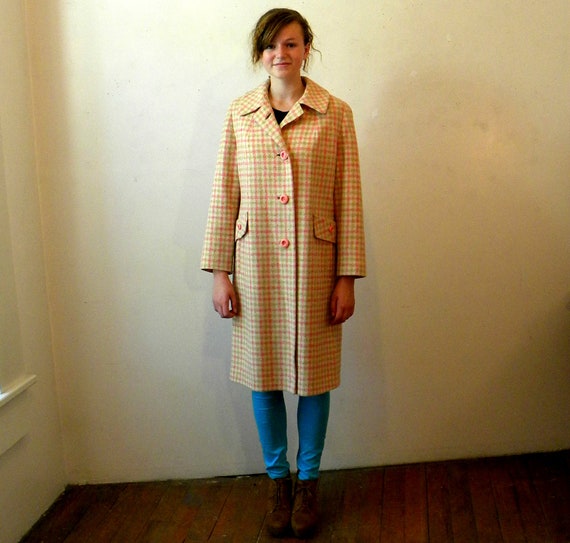
Oversize Coat / 1960s Wool Plaid / Pink Orange / Medium Large INCLUDES SHIPPING

Wool Pastel Plaid Oversize Coat, Size M-L, $79.

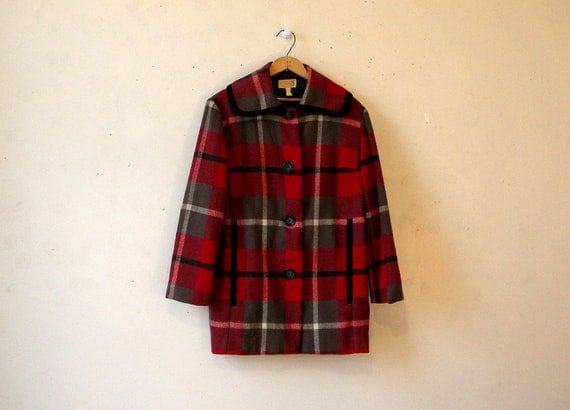
Plaid Pendleton Wool Coat Jacket / 60s 70s / Big Collar Beautiful Colors M-L

Plaid Pendleton Wool Big Coat, Size M.  $79

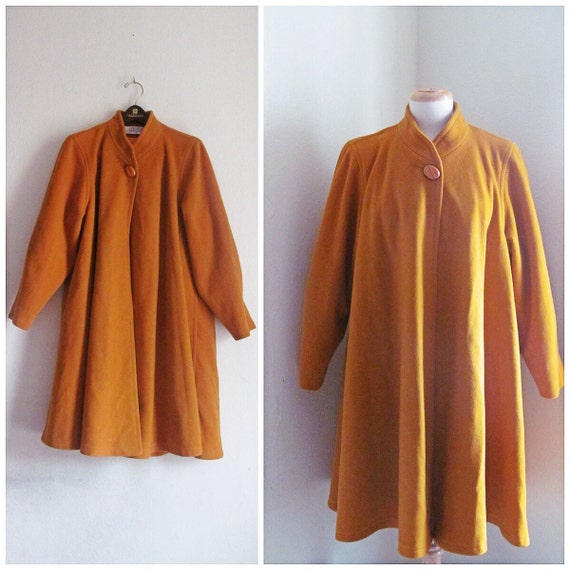
Big Band Mustard Yellow Swing Coat // 1990s I. Magnin Swing Coat

Big Band Mustard Yellow Swing Coat, Size 8, $148.

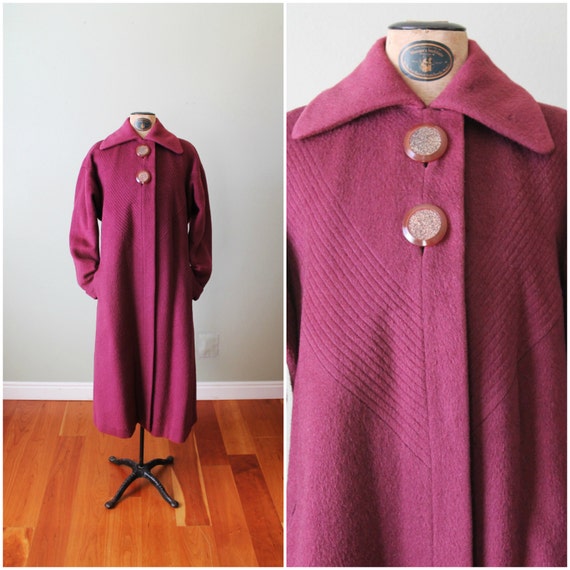
VINTAGE Wool Swing Coat / L / Purple / Burgundy / Pink Lining / Big Glitter Buttons / Alex Catalano

Vintage Swing Coat, Size L, $132.

I love the colors of these big coats. Where I live, we pretty much have five gray months a year. These crayon-box colors would warm up the spirits as well as the body.

Honestly, I don’t know what’s not to love about these coats.  What about you….are you feeling warm yet?

Monday, January 13, 2014

What is Vintage Clothing, Anyway?

 
photo: Google’s Life fashion collection.
There’s no denying that vintage clothing is hot today, and shows no sign of losing its appeal. 

But do you know what exactly is considered vintage? If you’re considering stepping into this incredible trend, it will help to know what you’re shopping for.

As a vintage clothes seller and student of the field, I have two rules for what qualifies:

  • Twenty years old
  • Have relevance and value beyond being “old”

Let’s look at these in more depth

If you want real vintage clothes, most sources say they must be at least twenty years old.  There’s some disagreement about this, but it’s a pretty good rule of thumb.

The first thing to remember is that not all clothes sold as vintage (especially online) are actually this old.  Sadly, a lot of people sell their old stuff from last season and call it vintage just because it’s used. Nothing could be more misleading.

Second, even if something is old enough to qualify as vintage, it should have some lasting value beyond its age. More about that below.  

photo: Google’s Life fashion collection.
Used clothing is not the same as vintage. 

In fact, some vintage clothing has never been worn. You could run across a fabulous mini dress from the 1960s with the original tags on it. Modern retailers often use the word “vintage” to describe clothes that are brand new but have retro styling. And on some online shopping venues, people clean out the stuff they bought last year at Forever 21 or Old Navy and sell it as “vintage.” Watch out for these if you want real vintage. 

Most definitions of “vintage clothing” range from 10-30 years. At Etsy, items have to be 20 years old to be considered vintage.  As I said above, this is my rule of thumb. But some vintage sellers who really know their stuff draw the line at about the 1980s.  For example, the Vintage Fashion Guild timeline for vintage fashions stops after the 1970s.

Now, when you get into really old clothing—say, 75 years to 100 years old—they are considered antique.  Again, definitions are not hard and fast but in general, if you find something more than 75 years old, you could safely call it “antique.” 

(For help dating your vintage clothing, visit this page.)

Finally, another confusing term used to sell modern clothes is “retro.”  This usually refers to clothes that are not actually old, but are vintage styles.  Modern manufacturers like ModCloth and eShakti fall into this category—they use words like vintage and retro to describe their items, but they are not true vintage because they are made right this minute. 

photo: Google’s Look fashion collection
Vintage clothing should also have special value beyond its age. 

This is a vague rule, but the idea is that vintage clothing that you buy to wear and use today should be more than just old enough. It should be special.

Think about it. There’s a lot of junk from the past that no one would want to wear today. Think cheap, poorly made stuff that wasn’t very attractive or special even when it was new.
 
The best vintage sellers will curate collections of well-made, relevant pieces that you can really use and enjoy now. 

They will be high quality and add real value to your style and wardrobe. Their value lies in their special designs, excellent workmanship, beautiful natural fiber fabrics, or other features that make them desirable.
 
So look for pieces that are old enough and have real relevance and modern value. Oh, and most importantly, look for things you love
 
That’s vintage!

Wednesday, January 8, 2014

Book Review: Vintage Wedding Style--More than 25 Simple Projects and Endless Inspiration for Designing Your Big Day


This post is a review of a beautiful, inspiring new style book for vintage weddings—full of ideas you can use for any party or event.

I’ve been married a while now, but I still adore weddings and beautiful craft books that inspire my creativity.

With the new year, what better time to review this recent wedding style guide: Vintage Wedding Style: More than 25 Simple Projects and Endless Inspiration for Your Big Day. It’s by Elizabeth Demos, and it’s just over a year old.

This author knows her stuff.  She runs a design studio in Savannah and, before that, owned a successful home furniture shop.

Living and working in historic Savannah would have to make a person develop an eye for beautiful vintage things! Elizabeth has contributed to Country Living, Country Home, Southern Living, Southern Living Weddings, Better Homes & Gardens, and Flea Market Style.

Okay…so on to the book.  If you like beautiful photography, this one will give you plenty of eye candy.  It’s organized around twelve fresh, vintage-y themes like “Airstream Elopement,” “Schoolhouse Rock,” “Industrial Revival,” “Flea Market Charm,” and “Vintage Glam.”

Just those names get my creative juices flowing….

The book features stories of actual weddings that the author styled around each theme.

In addition to the gorgeous photos, Elizabeth shares lots of how-to guides for DIY projects you can adapt yourself for each theme (examples:  paper-covered boxes and vintage fabric napkin rings). 

These projects are easily customizable. You could easily adapt them for birthday celebrations, dinner parties, anniversaries, or any special occasion using your own color schemes and favorite materials. 

What I especially like is that the instructions are thorough. Elizabeth includes tips like all the supplies you’ll need and how long before your wedding you should start the project.  This kind of detail is really helpful, especially for brides with tons of things on their mind.

Vintage Wedding Style isn’t a complete guide to planning  a vintage wedding. You should not expect it to cover everything you need to plan your special day. But if it’s visual and creative inspiration you’re after—even if you’re not getting married—I think you’ll like this book. 


Monday, January 6, 2014

How to Wear Vintage Clothing in 2014: Fresh Advice from the Pros

about page main photo smaller file

Ready to make your mark on 2014 with beautiful vintage fashion? Yay…me too!

Let’s start the year off right with some recent advice and ideas about how to make vintage clothing work in your current wardrobe.

ONE: MAKE IT MODERN

I really like this article from The Guardian UK. Among other ideas in it, a vintage dealer says wearing vintage well depends on making it look modern. 

This seems obvious, but I don’t think it is to a lot of us. It means that we should be careful about dressing in head-to-toe vintage, especially if we’re older than about age 20.  Too much is too much, and can look costume-y. But a gorgeous, well-made vintage piece can look almost like a work of art if it’s the focal point of an outfit, and surrounded by more contemporary elements.

TWO: VINTAGE AS PRACTICAL DRESSING

Next, take a look at this entertaining post from Bustle Magazine. You know, as much as I love vintage clothing, I’ve never thought of it as strictly practical. But Maria Southard Ospina, the author, makes a great case for why dressing in vintage is easy, fast, and practical for right now.

Why is this? First, vintage fashion is all about dresses—after all, this is what our mothers and grandmothers wore almost every day.  And what’s a dress? It’s one piece of clothing, that doesn’t need any thought to put on. You just throw it over your head or step into it, add shoes, and you’re ready.

Brilliant!

Marie also claims vintage-style makeup is a practical idea for the modern woman.

Really? Well, it makes sense if you think about it. Red lipstick and cat-eye eyeliner are a combination that’s fast, pretty, and flattering on just about everyone.  Another great point…I’m going to try it! 

THREE: LOOK FOR THE STORY

Finally, I really enjoyed this post about an upcoming book by Dawn O’Porter about the magic of vintage clothes. 

Clothes that others have owned and worn come with stories, and this makes them more meaningful and rich in experience than something brand new—especially when that new thing come from a “fast-fashion” outlet like Forever 21 or H & M.

If you love vintage clothing, you already know that vintage tends to be much better made than a lot of what we find today. There are gorgeous, natural fabrics you just can’t find anymore, as well as tailoring and design details that are almost impossible to find in modern mass-produced clothing. That’s because modern manufacturers just can’t afford to create that kind of garment and make money.

It’s not that I have anything against “fast fashion” per se—I go to that kind of shop for certain things—but for women who really attach personal value to their dressing (and who can’t afford couture), it’s hard to beat vintage. 

As the author of this article points out, vintage clothes have an aura, mystery, and depth of meaning about them that comes with their personal stories.  It doesn’t matter that we don’t actually know what the story is—we know that these pieces have them.  They are clothes “with a past,” and we can make their stories our own.

In our increasingly fast-paced world, full of “instant this” and “disposable that,” I find it comforting to wear clothing that’s neither instant nor disposable.

FOUR: WARM UP IN A BIG COAT

Since it’s still winter, let’s end our list of ideas for 2014 with a peek at this winter’s big coat trend. This article from Fashion Insider has the full scoop on the history of the look and how we can enjoy it in 2014.  I’m all about a big, warm coat…how about you?

Okay, I think we’re ready to knock ‘em dead in vintage for the New Year. Let’s get going!

Sunday, July 28, 2013

How to Dress Like A French Woman: R-E-S-P-E-C-T

http://images.thesartorialist.com/thumbnails/2012/10/100212LVScarf8247Web.jpg
A list of proven fashion lessons from our French sisters...updated January 2014. 

A lot has been written about how to dress like a French woman. In July 2013 I spent four days in Paris and made my own list of ideas. Since my original post, I've gotten feedback and comments from several French women approving of the list...and that makes me happy!

Here's the original post:   
 
Even my husband, not usually tuned in to fashion, noticed “a lack of colorful clothes” on our trip.  He didn’t know it, but he was honing in on the classic strategy of dressing in neutrals.  
 
And that’s the whole point, really. French women have mastered some classic rules, and they follow them. I think they also show more confidence than a lot of us Americans. One French woman I read said they'd rather look clever than beautiful. 

Most of us want to look like ourselves in ways that make us happy and at ease in our surroundings.  
 
The French seem able to do this. Day after day, they appear looking effortlessly appropriate and stylishly ready for anything.  That’s why we copy how they dress.
 
http://images.thesartorialist.com/thumbnails/2013/03/3613AtLV_7858web.jpg

And so my Dos and Don’t’s are really ideas for dressing well, inspired by the French. 

The Do’s are what I saw.  

The Don’t’s are what I did not see in Paris—these are clothes I see a lot in the U.S. (including my own closet), and on travels to the UK.
 
Did I miss anything?  

DO :
  • Try this uniform: skinny jeans + boots + a great jacket – seen on women from 16 to 60
  • Anchor your outfit with a neutral color
  • Go for excellent fabrics
  • Go for the best quality construction possible
  • Wear clothes that fit – that suggest the shape underneath
  • Aim for grown-up femininity
  • Have well-made shoes (ballet flats, boots, and pumps)
  • Make friends with scarves
  • Favor solid colors
  • Keep your hair natural
  • When in doubt, go for the understated look
DON’T
  • Wear pastels
  • Buy cheap, “fast fashion” a la Target, Walmart, and Old Navy
  • Choose fabrics that wear out, pill, fade, or fall apart in one season
  • Dress in an overtly sexy way
  • Wear capri pants and a tee shirt as a summer uniform
  • Wear sneakers or workout clothes except for working out
  • Hide your shape under shapeless, baggy clothes
  • Wear head-to-toe colors
  • Wear head-to-toe prints
  • Overdo your hair or makeup
  • Give up on fashion after a certain age
For me, the really compelling idea is that French women give off an air of “I’m happy with myself.” I think it shows self-respect to buy a few clothes that are well-made, expensive, and beautiful – to take clothes seriously, but with restraint. 
 

The French seem to value food the same way – quality over quantity. And this, too, shows in what we think of as the French fashion “look.” 
 
Let’s face it—clothes look different on thin people than not-so-thin. And even though obesity is on the rise in France, French women as a whole are still thinner than Americans and British.
 
As an American woman with a few extra pounds, I know first-hand the complex and usually painful issues most of us have with body image and weight.  They’re closely tied in with how we dress.    
 
But I take encouragement from what I saw in France. Can we American women use the French example to treat ourselves with as much respect as possible concerning clothing, food, and body-image?
That seems like a great basic rule for dressing well.
Cheers, Sally 
photos used with permission, from www.thesartorialist.com


Tuesday, July 23, 2013

Expert Advice: How to Buy and Care for Cashmere Sweaters

I’ll never forget the birthday sweater I bought myself three years ago.  It was the most perfect shade of blue and thick, soft cashmere.  The only problem was that after I wore it—once—it was covered with pills under the arms and back.  Into the return package it went.  And you can bet I never bought a sweater from that company again.

I hope this hasn’t happened to you, but I’m guessing it has, if you love cashmere.  

Cashmere is the fiber of the cashmere goat, and it’s been a luxury for centuries.  For most of that time, it was truly a luxury item.  A sweater could cost $200 in the days when $200 went farther than it does today. 

But the last fifteen years have seen an influx of dirt-cheap cashmere into world clothes markets.  More and more manufacturers are selling cashmere, some of it at very low prices.  

Cashmere Goat

isn’t she cute?  Link, here

The good news is, cashmere is more accessible to many of use than  it used to be.  There’s just more of it around—it’s even showing up in thrift stores. 

The bad news is, unless we know what we’re buying, we can be very disappointed in a cashmere purchase. 

Here are some cashmere facts that can help us make good buying decisions (see my sources at the bottom of post).   

  • Today, China has become the world’s largest producer of cashmere—in the past, France and Scotland were top producers.
  • Quality varies according to length and width of fibers.  Width determines softness, while length determines strength.  Long, thin fibers are the best quality and will get softer over time. 

To Test Cashmere for Quality….

  • Rub the surface with your fingers.  Low-quality cashmere will pill almost immediately. 
  • Crush the fabric in your hand.  Fewer wrinkles equal better quality. 
  • Gently pull the sweater.  Good quality springs back to its original shape. 
  • Look for tags that say pure fibers or wool blends only.  Blends with synthetics can mean lower-quality cashmere was used.   

Pish Posh Pashmina

“Pashmina” is not a material separate from cashmere.  It’s a name used to mislead consumers into thinking they’re getting cashmere.  The word “pashmina” comes from the Persian for wool—Pashm.  A garment with a fiber label of “pashmina” in the U.S. is breaking federal regulations that require the exact content of cashmere be disclosed. 

A better use of the word pashmina is to refer to the scarf-like shawl.  Pashminas are super versatile items and I highly recommend having one….but don’t assume it’s made of cashmere. 

Care of Cashmere

Knit cashmere is best hand-washed.  Hand-washing is actually better for the fibers than dry-cleaning, and will result in a sweater that just gets softer over time. 

If you buy cashmere that pills up, try an inexpensive shaver or a sweater comb. 

The Bottom Line

A good-quality cashmere item can last a lifetime if you choose well.  Before you drop good money on cashmere garment, learn what you’re getting.  There’s nothing wrong with choosing a lower-priced, lower-quality garment as long as you know aren’t being misled into thinking it’s something different.  

From:  Cashmere and Camel Hair Manufacturers’ Institute FAQ’s and U.S. Better Business Bureau article on Federal Trade Commission Regulations on Cashmere Labeling.  Albany Times Union, Dec, 25, 2004; “Italy Faces Mounting Threats to Cashmere,” Women’s Wear Daily Dec. 6, 2005. 

sallymandy


Vintage Clothes Shopping in Paris: Freep’Star and Vintage by Ramin


This summer I had the good luck to visit the Marais District for several days—an area known for excellent second-hand and vintage clothes shopping in Paris. 

Below, I’ll tell you what I liked about places I visited, along with some strategies for vintage clothes shopping in this city. 

First, a word about language.  The French word “fripes” loosely translates as second-hand clothes that tend to be of similar quality to what you’d find in an American thrift shop. 
As in the U.S., the word “vintage” also seems to be used in France with some confusion. 

Younger shoppers may use it the way we do in America, referring to clothes that are only twenty or even ten years old.  But my friend Yseult, who’s over 50 and a former Hermes’ employee, told me “vintage” usually implies nicer, older clothes with an actual pedigree. 
On my Marais shopping day, I basically wanted to go thrifting in Paris.  I was looking for fripes.

At the shops I visited, trend-conscious buyers have curated mountains of  second-hand clothes looking for current style value.  The pieces cover a range of quality levels, and they may or may not be old enough to qualify as vintage in the U.S.

Prices at these “friperies” are higher than your average thrift shop, but still accessible (dresses run from 5-15 euros--approx. $6-20). 

My destination:  Free’p’Star and Vintage by Ramin.  Both of these are on Rue St. Croix de la Bretonnerie—a tiny old street in the heart of the funky, historic Marais. 

And so, one afternoon while my travel mates went off to the Champs Elysees, this mouse went out to play…

Free’p’Star, 8 Rue St. Croix de la Bretonnerie.   
saintecroix
Free’p’Star is something of an establishment in Paris and has three boutiques in the 4th arrondissement.  You could visit them all in one afternoon, although I only went to one. 

KINDS OF INVENTORY:  Cut-off shorts, lots of scarves, leather jackets, military jackets, and a great rack of white cotton blouses.  Sale room in the basement—be careful on the teeny spiral staircase.  Did I mention all the scarves?  Prices:  Moderate.  Dresses regular prices are 10-15 euro ($13-20), with sale prices about 5 euro ($6). 

Free’p’Star also has frequently updated stock.  I went back a couple days after my first visit and found a lot of new things, all equally good. 


Vintage by Ramin, 17 Rue St. Croix de la Bretonnerie. 

This shop is newer than Free’p’Star and about the same size.  It’s catering to a similar market and prices are about the same.  Worth checking out.  

KINDS OF INVENTORY:  Along with the usual stuff, I liked the selection of lots and lots of shirts for men and women.  Quite a few 60s and 70s-era vintage dresses.  The 1-euro sale bin in the back was full of vintage (and I do mean vintage) Speedos on the day I visited. 

STRATEGIES for THRIFT and VINTAGE SHOPPING in PARIS: 

Avoid crowds.  Especially if you’re used to American shops, second-hand clothes shops in Paris are tiny and feel cramped with even half a dozen other customers.  Go early, late, or on a weekday.  

Plan ahead for trying on.  Recommend wearing a bodysuit or something else you can strip down to for trying things on—there’s not much private space for trying on.

Communicate. Know some basic French phrases.   Be courteous.  Although I’d bet a chocolate croissant you’ll hear American music, you’re on their turf.  The customer is not always right.  

Other second-hand and vintage clothing shops in Paris:  See this excellent list from Paul and Sophie.

Monday, July 22, 2013

Timeless Fashion Tips from Jane Birkin

I’m not too familiar with Jane Birkin’s music or acting careers.  And I know that in her younger years she was often photographed without any clothes at all. 
But I love her fashion sense of today. 
Here are some photos of her middle-age wardrobe.  They remind me of the clothes I saw on women of all ages on a recent trip to Paris: 
Ideas to borrow from Jane: 
Neutrals in quality fabrics…
jane_birkin_narrowweb__200x308
Monochromatic classics with a subtle menswear vibe.
jane_birkin_reference
Comfort and playfulness…
birkin
And, finally, the best accessories:  A wide smile and a feeling that she doesn’t take herself too seriously. 
fm20040201a1a
Love,
sallymandy
doing business as Chronologie Fine Vintage

Saturday, July 20, 2013

The Golden Ratio and Vintage Clothing


[Vitruvius13.jpg]

Artists and mathematicians have been fascinated by the “golden ratio” for thousands of years.  The golden ratio occurs in nature, and is a mathematical formula used by artists, designers, architects, and fashion designers in creating beauty.  The golden ratio even has a role in vintage clothing. 

What is this magic number?  Technically it’s 1.1688.  But for artistic  uses it’s often simplified to this:  1:1.5, or a 2:3 ratio.

The Swiss architect Le Corbusier applied the golden ratio (as well as the related Fibonacci sequence) in his work.  He believe the golden ratio naturally appeals to the human eye, and that people, regardless of culture, are drawn to it whether they know it as mathematical formula or not.    

Corbusier’s idea is an intriguing one, and there’s a lot of evidence to support it.  Art and science both recognize that faces and figures considered “beautiful” throughout history have features that relate to each other in the golden ratio.  Leonardo da Vinci studied the golden ratio and depicted it in his famous Vitruvius Man (above).

Architecture, art, and design of all media also use a 2:3 ratio in many applications for good aesthetics.  Floral designers are even taught to place stems in a 2:3 ratio to the height of a vase. 

Vintage clothing fans will be interested to know that well-proportioned clothing has historically been based on the golden ratio. 

Here’s a picture from a 1926 high school home economics textbook, in a chapter about proportion in clothing construction.  The figure on the right captures it; the one on the left is off.  The two sections of the dress at right are generally in golden-ratio proportion, and the sleeve divides the girl’s arm into golden ratio sections. 

Good-Spacing-Or-Proportion-In-A-Dress-157

For more about the golden ratio, here’s a site you might like, and here’s one more.

Love,

Sallymandy

Tuesday, March 13, 2012

How to Upcycle A Zooey Deschanel Dress

What is it about the cute vintage dresses Zooey Deschanel wears on and off screen that makes everyone go gaga? 

Zooey’s dresses are pretty, but they’re made for modern life.  How to re-create this look without spending a fortune?  Starting at your local thrift store or vintage shop, it’s possible to upcycle a completely one of a kind dress a la Zooey.   

Here are a few tips to start with.

image image imageimage image

image image

1.  The Pretty Factor.  Zooey’s look is feminine without being overtly sexy.  Look for second hand dresses with retro-style details like gathered or pleated skirts, peter pan collars, small florals or other subtle patterns, lace, pintucks, etc.  In general, these are dresses that hug the body only at the waist.     

2.   Quality and Condition.  Be sure everything’s in good condition.  You don’t want to get home and find the zipper is broken or the armpits are stained!   

If you buy from a vintage clothes shop online, the seller should describe the item’s condition in detail.  Don’t buy from a seller who only says “good condition.”  You need all the facts.   

Some problems are relatively easy to fix if you want to take the time.  For tips on getting stains and smells out of second-hand clothes, look here.  And here’s a tutorial on replacing a button. 

3.  Making it Modern!  Looking at the examples of Zooey’s dresses above, they all have this in common:  They hit above the knee—farther above than most dresses were worn in the past. 

Now, a lot of thrift-store dresses aren’t short.  Those from the 1980s and 1990s hit about mid-calf (which, incidentally, is generally very unflattering).  But lots of these dresses are still great candidates for upcycling a la Zooey because of other details.

Sometimes all you need to create a cute modern vintage look is to shorten a dress above the knee.   You can get a seamstress at the dry cleaners to do it—generally about $15. Or you can do it yourself.  I recommend this tutorial.

The second change you might make to a thrifted dress is to take out those big ol’ shoulder pads.  These are usually very easy to remove; but if you’re nervous, here’s an article with instructions.

Unless the pads are reeeeally huge, taking them out won’t change the way the dress hangs.

Here are a few dresses in my my online vintage shop that have gotten the complete Zooey-fying treatment.  At less than $40 each, they’re still a bargain for a cute, well-made dress that’s one of a kind. 

  image

Peter Pan collar dress, size 6, $35. 

image

Indie Secretary Dress, M-L, $30. 

image

Yellow Floral Dress, M, $38. 

love,

sallymandy

Thursday, March 1, 2012

How to Remix Your Vintage Fashion Finds

Imogen Lamport’s blog, Inside Out Style, has great suggestions about all kinds of style questions. 

These can be especially helpful when you find something unusual and one of a kind at vintage clothing shop—but aren’t sure how to style it.  Below are links to some of my favorite posts from Imogen.  They are illustrated with items from my vintage clothes shop

How to Wear Stripes

image

How to Mix Prints and Patterns

image

Adding Color to Black

image

Re-fashion, Re-vamp, Recycle, Renew

image 

and, last but not least:

How to Hide Your Tummy (these cute models don’t have tummies to hide, so there’s no photo for this)! 

Go have a look at Imogen’s blog

!  And for more cute vintage clothes, you can visit Chronologie Vintage here

sallymandy

Sunday, February 26, 2012

The Fascinating History of the Dahlia


Dahlia I by Caroline Kelly

Do you love dahlias as much as I do?  The incredible variety of size, shape and coloration in today’s dahlias results from a fascinating history of cultivation. 

A few years ago I became so obsessed with the dahlias (which I am fundamentally unable to grow) that I spent some time researching its history.  So get a cup of tea and join me on a winding, colorful walk through the garden of the past.  

black_red_dahlia.jpg Dahlia image by tonisara1

 DAHLIA1.jpg Dahlia image by jblumsdon

   DSC06190.jpg sunlight on dahlia image by janmellon

As the photos here show, the magnificence of the modern dahlia is largely a function of its complex petal structure and color variety.  But the original dahlia was much more humble.  Today’s cultivated species originated from a simple Mexican wildflower, so common as to be considered a weed, and with only only eight petals and few colors. 

To understand how this happened, we must go back to Mexico shortly after the end of the Aztec Empire.  The year is 1552.  The place is the heart of Mexico:  Tenochtitlan, or Mexico City. 

For over forty years, the city has been in the hands of the Spanish conquistadores.  The last Aztec dictator, Montezuma, is dead. 

Deep in the Aztec quarter of the city, a school operates for the education and Christianization of Aztec boys.  It is known as the Colegio de Santa Cruz de Tlatelolco.  A young Aztec student named Juannes Badianus has written a botanical treatise on the fundamentals of the very sophisticated Native botanical practice.  When Juannes is finished with the manuscript, it is translated into the Latin by Martinus de la Cruz, another talented Aztec student at the colegio.   

colegio

El Colegio de la Santa Cruz de Tlatelolco

The manuscript these two produce will be known to history as the Badianus Manuscript.  It is the first known compendium of medicinal plants in the New World. 

The manuscript contains a depiction of a simple eight-petaled wild dahlia, below, included in the manuscript because the Aztecs valued these wild flowers for their many medicinal qualities.  Scholars believe the drawing is the species we now know as Dahlia coccinea, one of the many wild Mexican dahlias. 

  badianusmanuscriptdahlia1542

This illustration may be the first recorded example of a wild Mexican dahlia—or any dahlia, for that matter.   Although scholars are not unified in in this belief, what is clear is that this stylized illustration does resemble a wild Mexican dahlia, characterized by its “single flowered” structure—that is, a flat, eight-petaled arrangement.  Almost always, wild dahlias possess this single-flowered structure.

dahlia.jpg dahlia image by vballchic_2211

 1712dahl.jpg Dahlia image by avoca39

 dahliawhite.jpg Dahlia white image by redwood81

It is now almost a hundred years later.  Back in Spain, King Philip II has commissioned a book of medicinal plants from the New World.  It will be authored by the King’s personal physician, Francisco Hernandez.  

This huge work, known as Rerum Medicarum Novae Hispaniae, is even larger and more far-reaching than the Badianus Manuscript.  After many revisions and additions, it is finally published in Rome, many years after its author’s death.   

The Rerun Medicarum contains illustrations of many flowers that will later be called dahlias.  One of them points to a mystery that scholars and scientists today have yet to unravel.  The flower in this illustration is a double variety—that is, having two “layers” of petals. 

Because the known wild dahlias are “single flowered,” with eight petals, and given the long history of dahlia cultivation in Aztec culture, it is presumed that the illustration shows a dahlia that people have cultivated.  But no one knows how or where, or by whom, the cultivation was done.  The other two depictions in the Rerum Medicarum are of single flowers.   

dahlia.jpg Dahlia image by vendettachrncls

DelectableDahlia.jpg Delectable Dahlia image by pholawit_p

It is now over a hundred years later—the late 1700s. 

Jose Antonio Cavanilles is director of the Royal Botanic Gardens in Spain, and a major figure in world botanical circles.  In about 1788 or 1789, Cavanilles receives a shipment of seeds from a Mexican botanical garden.  He plants these and records his findings as they grow.  Among the resulting plants are three that are unusual enough that he later classifies them as a new species.  He calls them “dahlia” after his friend, the Swedish botanist Andreas Dahl.  

The first of Cavanilles’ recorded dahlias appears in 1791.  He names it d. pinnata.  It is a double-headed flower.

"Dahlia pinnata"

Cavanilles’ drawing of Dahlia pinnata, ca. 1791

Later, in 1796, he records two others, d. rosea and d. coccinea.  Both are single-headed.

 Cavanilles’ drawing of Dahlia coccinea, ca. 1796.  

Once again, a double-headed dahlia is recorded in Europe but not attributed to cultivators in Mexico.   Because of the scarcity of double-headed dahlias in nature, it is generally presumed that Cavanilles’ seeds came from cultivated plants.  But from where?  And—cultivated by whom? 

By 1800, there is widespread interest in Europe for plants of the New World.  In 1802 Cavanilles sends dahlia seeds to the Paris Museum of Natural History, and elsewhere in Europe.   Each successive sowing shows the species’ remarkable variability, bringing new colors and shapes.

In Berlin, dahlias are mistakenly re-classified as a different species for a fourth edition of Linnaeus’ Species Plantarum. This “new” species is named Georgina.  Thus, the plant is known both as Georgina and Dahlia for many years before the duplication of naming was discovered and corrected.  In some parts of Eastern Europe, “georgina” is still used to name a garden dahlia. 

dahlia.jpg Dahlia image by cheddarchick

 Yellow_Dahlia.jpg flower image by Angellin16

 red_white_dahlia_macro_SM4281.jpg dahlia image by Scarlet_Mongoose

 Dahlia21.jpg Dahlia image by threeleven311

 lovender-dahlia-2a1024x768.jpg Fuscia Dahlia image by lolitvalle52

 dahlia.jpg My Dahlia image by gameangler

By 1934, over 14,000 dahlia cultivars are recognized.  Much of the work of developing these strains has occurred in England, and history has obscured the Mexican heritage of this most popular garden flower.

In particular, the question has remained unanswered of whether the first “double” dahlias were cultivated or occurred in the wild. 

Today, the dahlia is the national flower of Mexico, and the presumed original species, dahlia coccinea, grows wild on the mountainsides as it did many hundreds of years ago.  

dahlia

 Wild D. coccinea

Reading List: 

The Dahlia, An Early History from Harvard University’s Arnold Arboretum

Stanford Dahlia Project

All Rights Reserved, The Blue Kimono, 2011. 

Unless otherwise marked, photographs come from www.photobucket.com, and you can find their titles and artists by scrolling over the images. Other unmarked photos are in the public domain.